
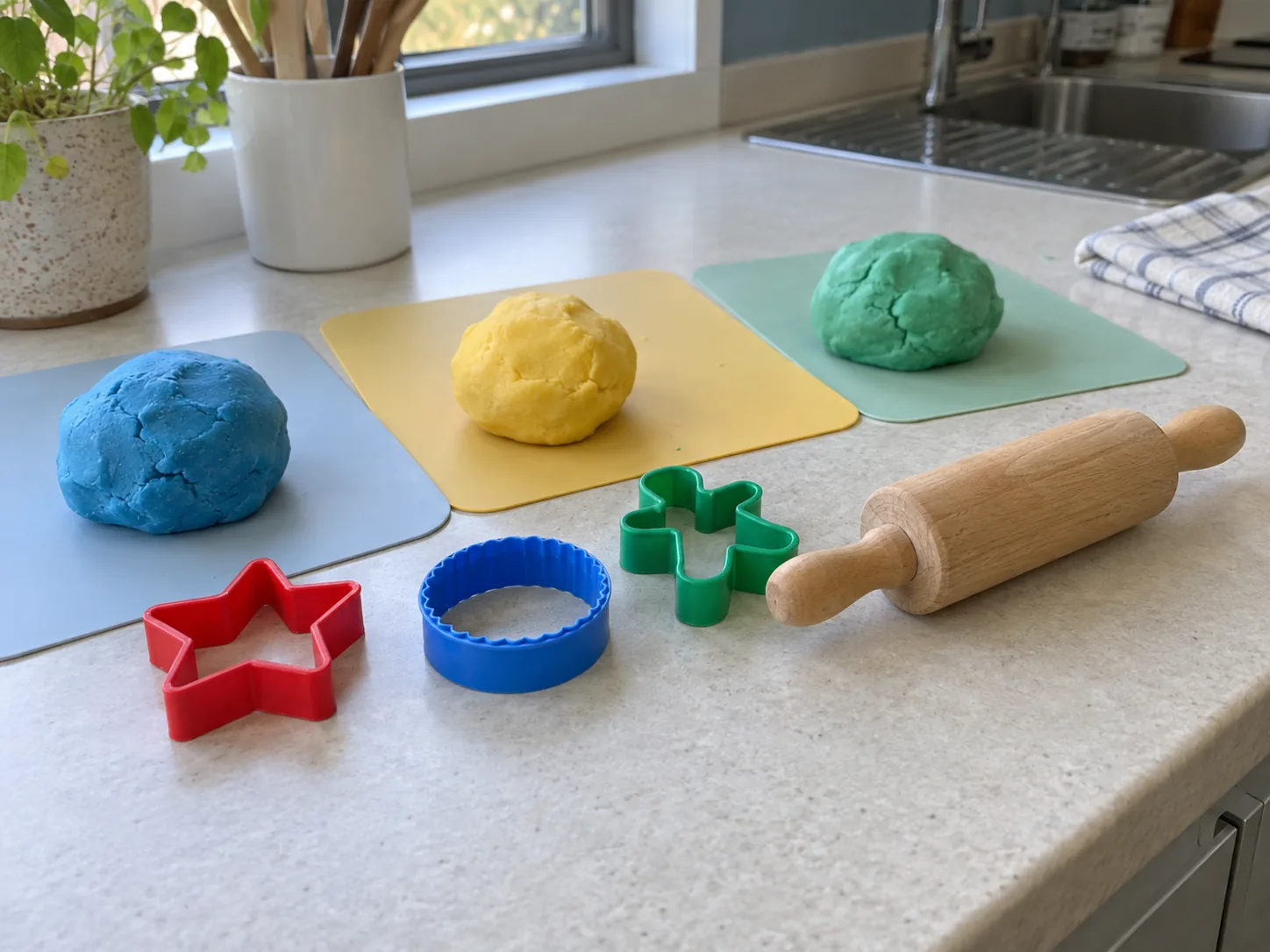
Ingredients and materials
- 150 g plain flour
- 75 g salt
- 10 g cream of tartar
- 250 mL water
- 15 mL vegetable oil with its source checked
- Optional centre-approved colouring; saucepan, spoon, washable mats and individual tools
Make it together
- An adult checks all ingredients, including colouring and oil, against the room’s allergy and skin-contact plans. Choose a non-food activity if those controls cannot be met.
- Away from children, combine ingredients in a saucepan. Stir over low heat until a dough forms and pulls away from the pan.
- Remove from the heat and cool completely. An adult checks the centre of the dough before children touch it.
- Give each child a separate portion and clean tools on a washable mat. Roll, press and shape together under active supervision.
- End the activity if children put material in their mouths. Dispose of contaminated portions; clean tools and surfaces, and wash hands after play.
Before the children join in
- Not edible: its high salt content makes this unsuitable for tasting. Keep it separate from snacks and meal preparation.
- Cooking does not remove wheat allergens. Check contact exposure as well as eating risk.
- This activity is unsuitable for children who are still mouthing materials unless the service has an appropriate alternative activity and supervision plan.
Talk, notice, explore
Can you make something long, something flat and something round using the same piece?