
01
Tenant-scoped retrieval
Protected resources are retrieved within their organisation and site context, not trusted from a selected-site screen value alone.
Security & privacy
Queux uses explicit tenant boundaries, minimum necessary personal information, private document handling and accountable history.
Security principles
Security is not a badge or a single setting. These are the design controls Queux applies across protected workflows.
01
Protected resources are retrieved within their organisation and site context, not trusted from a selected-site screen value alone.
02
Authorisation verifies the person’s role and the resource scope. Cross-tenant lookups avoid revealing another tenant’s records.
03
Uploads are intended for private storage with validated type, generated names, malware-scanning boundaries and authorised streaming.
04
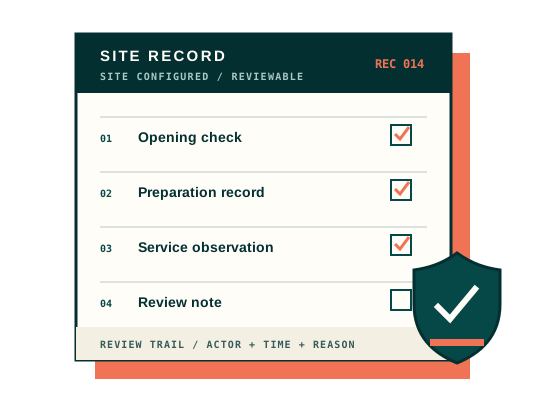
Published content and finalised submissions are immutable; corrections create versions or amendments with actor, time and reason.
05
Recoverable credentials are encrypted, one-way secrets are hashed and webhook signatures are checked before persistence.
06
Kitchen calculations use aggregate room, meal, dietary and texture counts by default, reducing unnecessary personal information.
Access model
Every protected action needs an authorised user and a resource verified within the appropriate organisation and site.
Owners, administrators, kitchen staff, reviewers and auditors receive only the capabilities assigned to their work.
Cross-tenant identifiers return a not-found response where disclosure itself would expose information.
Authentication, verification, rate limits and session protections surround sensitive entry points.
Critical changes record who acted, when, where and why.
Operational boundaries
The protected workflow continues beyond the interface, from upload validation to external request handling.
Private upload boundary
Private plans, certificates and evidence should be stored outside the public disk. The upload flow validates extension, detected MIME type and size, uses server-generated names, and passes content through the configured malware-scanning adapter.
A download is streamed only after the current user and tenant scope are authorised.
Provider boundary
Provider and payment integrations use maintained adapters so signature checks, timeouts, retries, idempotency and logging can be tested without placing credentials in presentation code.
Queux does not store payment-card details. Payment processing depends on the configured payment provider.
Privacy posture
The intended privacy approach is purpose limitation, minimum necessary data, controlled access and documented retention.
The public privacy policy draft and data processing terms draft describe the intended framework. Both require qualified legal review before commercial launch.
Need a deeper review?